Union Station (#2)
Medium: Photography (35mm Film, Nikon F4)
Date: 2003 - 2004
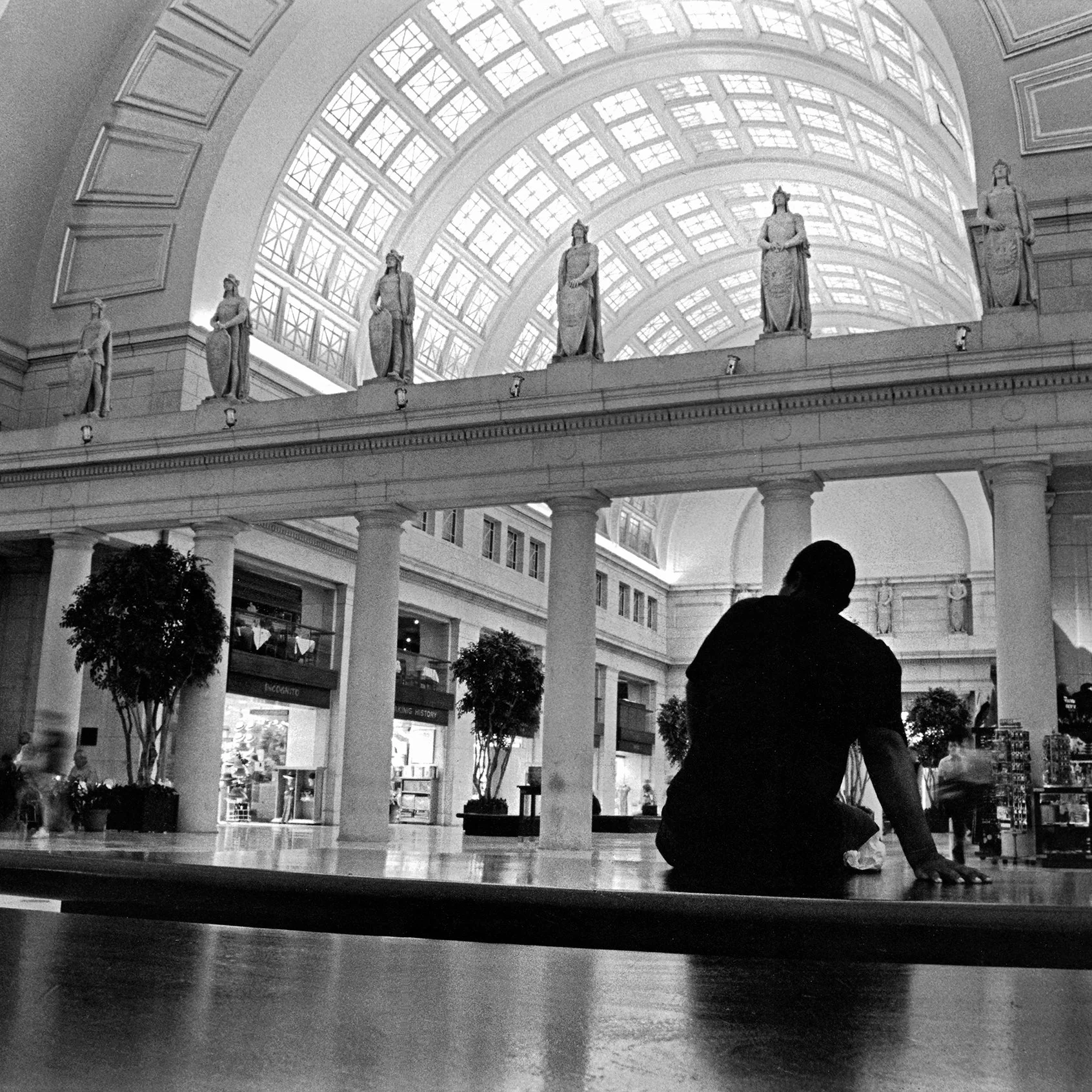
Photographed inside Union Station in Washington, D.C., this black-and-white image captures a seated figure resting beneath the monumental vaulted ceiling of the station’s central hall. Columns, statues, and the coffered skylight structure dominate the upper half of the frame while travelers blur through the space below, creating a contrast between stillness and motion.
The image balances human scale against institutional architecture. A single figure sits in silhouette while the larger structure of the building rises above him, illuminated by light pouring through the high windows.
Process Notes:
This photograph was taken at Union Station in Washington, D.C. during my first term in Media Studies (Photography) at Columbus College of Art and Design. The assignment involved capturing motion using long exposure, an exercise intended to introduce students to how movement, light, and time could be translated onto film.
Standing in the main hall of the station, I began experimenting with exposures as travelers moved through the space. The architecture of the room, towering columns, statues, and the repeating arc of the windows, creates a monumental institutional presence. Against that structure, people pass through almost anonymously: figures blur, pause, sit briefly, then disappear again into the flow of the station.
One person remained seated on a bench beneath the massive interior architecture, a still point within the motion of the space. The photograph captures that brief alignment: the permanence of the building, the movement of the crowd, and a single figure suspended between them.
Technically, the image was challenging from the start, especially for a freshman student. The bright windows at the top of the frame created an extreme contrast range, pushing the film beyond what could easily be balanced in a single exposure. As a result, the negative forced a choice between preserving the architectural detail in shadow or holding the highlights of the windows.
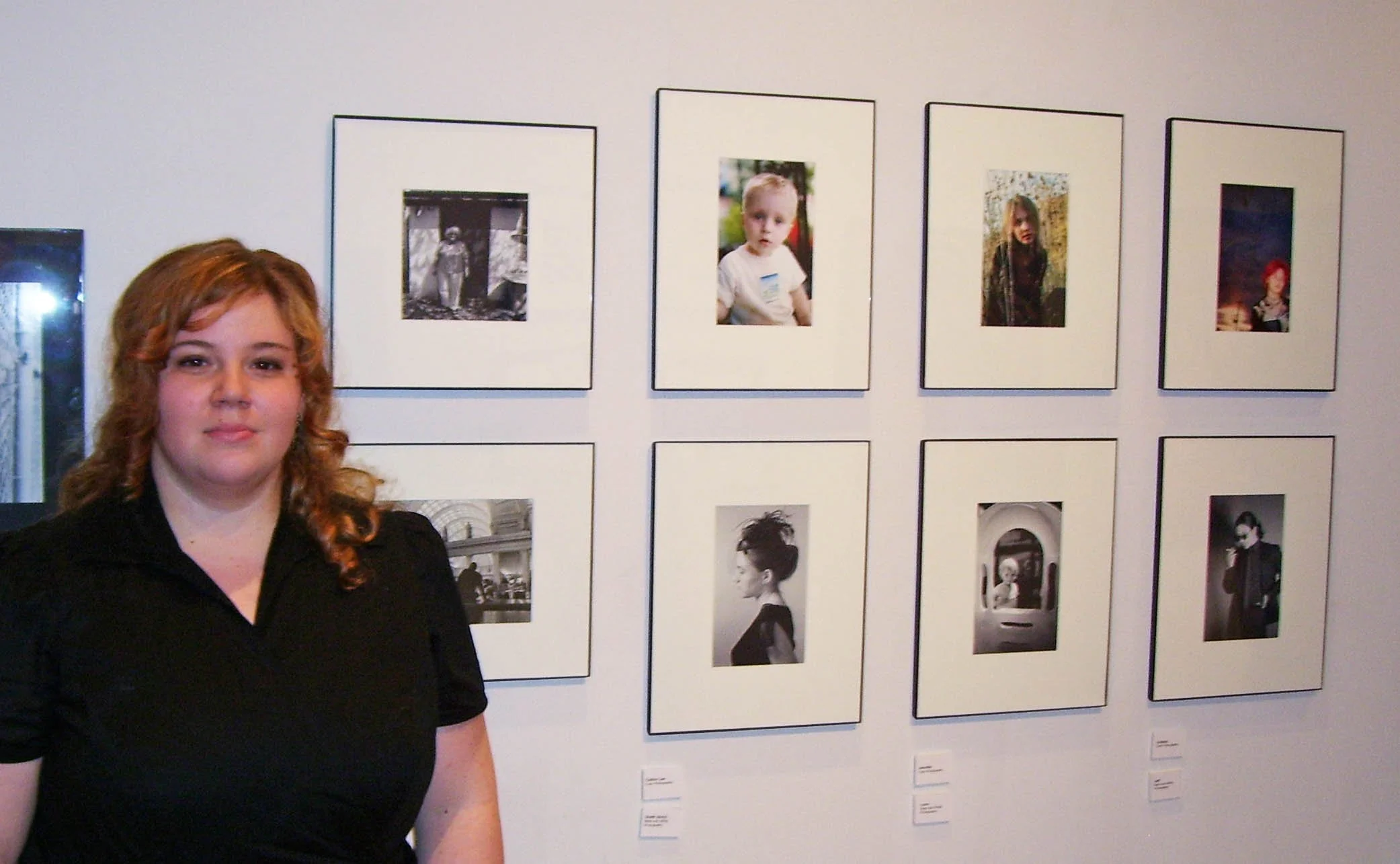
Printing the image in the darkroom became an important early lesson in photographic problem-solving. Burning, dodging, and tonal adjustments were required simply to bring the space into visual balance. The print shown here is a scan of a later darkroom print made years after the original class assignment, a return to the negative with a more experienced understanding of how to shape the image. That print was made in my home darkroom for my senior art show at Salisbury University (sometime in 2007, pictured below).
Even now, the photograph still contains imperfections that I can see clearly. But those technical limitations are part of the image’s history. What has kept the photograph alive for me over the years is not technical precision, but the moment itself, the way architecture, light, and human presence briefly arranged themselves into a composition that was visible for only a few seconds.
There is also a quieter tension within the image that I didn’t fully articulate at the time I made it. Union Station’s grand architecture evokes permanence, order, and institutional authority. Beneath it, ordinary people move through the space in far more temporary ways, waiting, passing through, existing.
That relationship between the monumental and the human, the institutional and the individual, continues to resonate whenever I revisit the photograph.
Process Gallery:
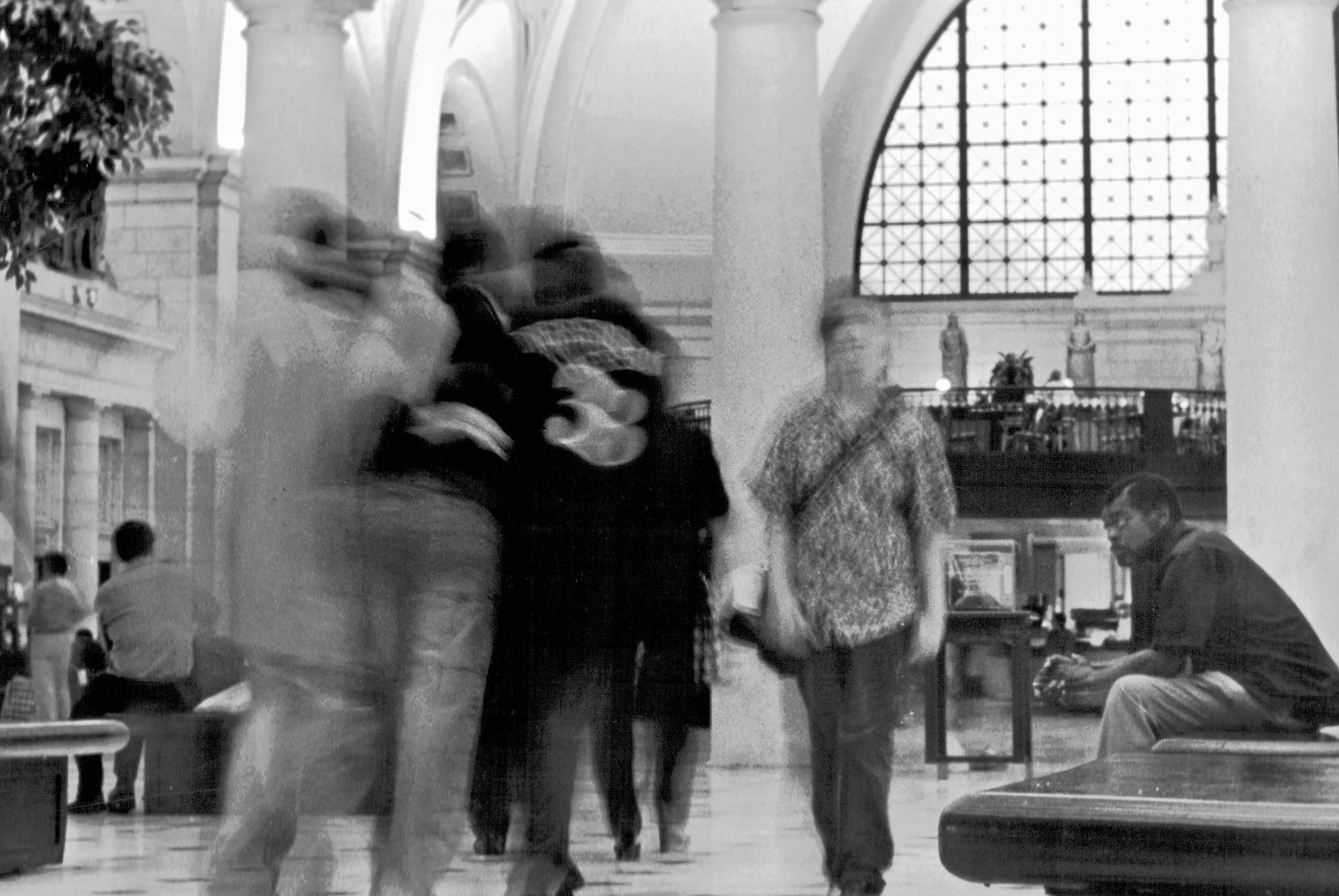
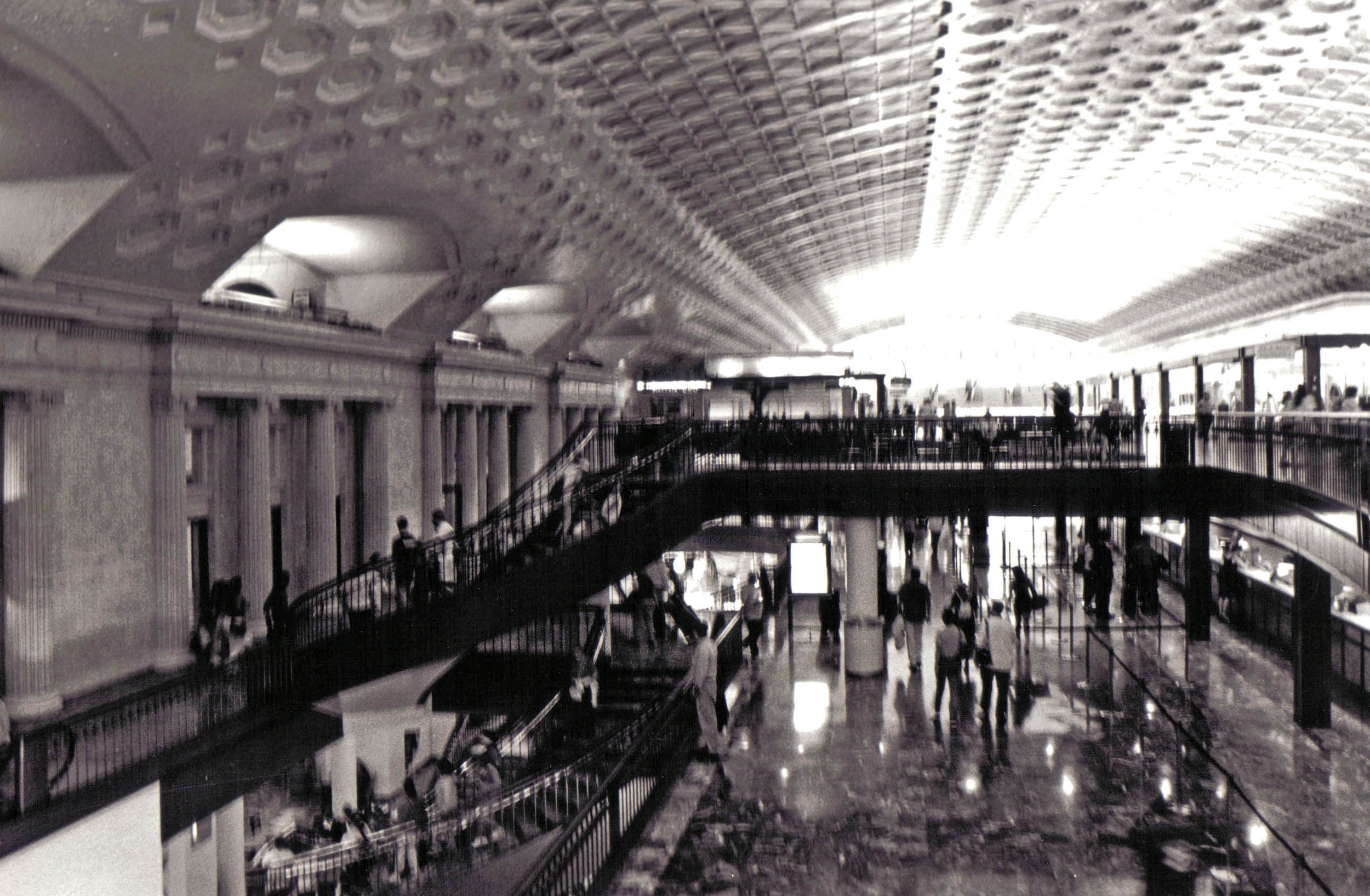
These images document two stages in the life of this photograph. The first set (black and white) includes additional frames taken during the same Union Station shoot. The figure in the center of the first image is a friend and fellow CCAD student, whom I had known since high school.
The final image shows the photograph installed in my 2007 senior art exhibition at Salisbury University. The exhibition, which brought together work from across my undergraduate studies, received Salisbury University’s President’s Award for Visual Communications.
Further Reading:
You can read associated thoughts on this photograph here:
On Authority, Accountability, and the Ground Action Stands On
In moments of collective confusion and demand for response, I return to a simple question: “Do I believe that those who create and enforce the rules should also be bound by them?” Read more …